
My Friend Stan
The Jealous Wife

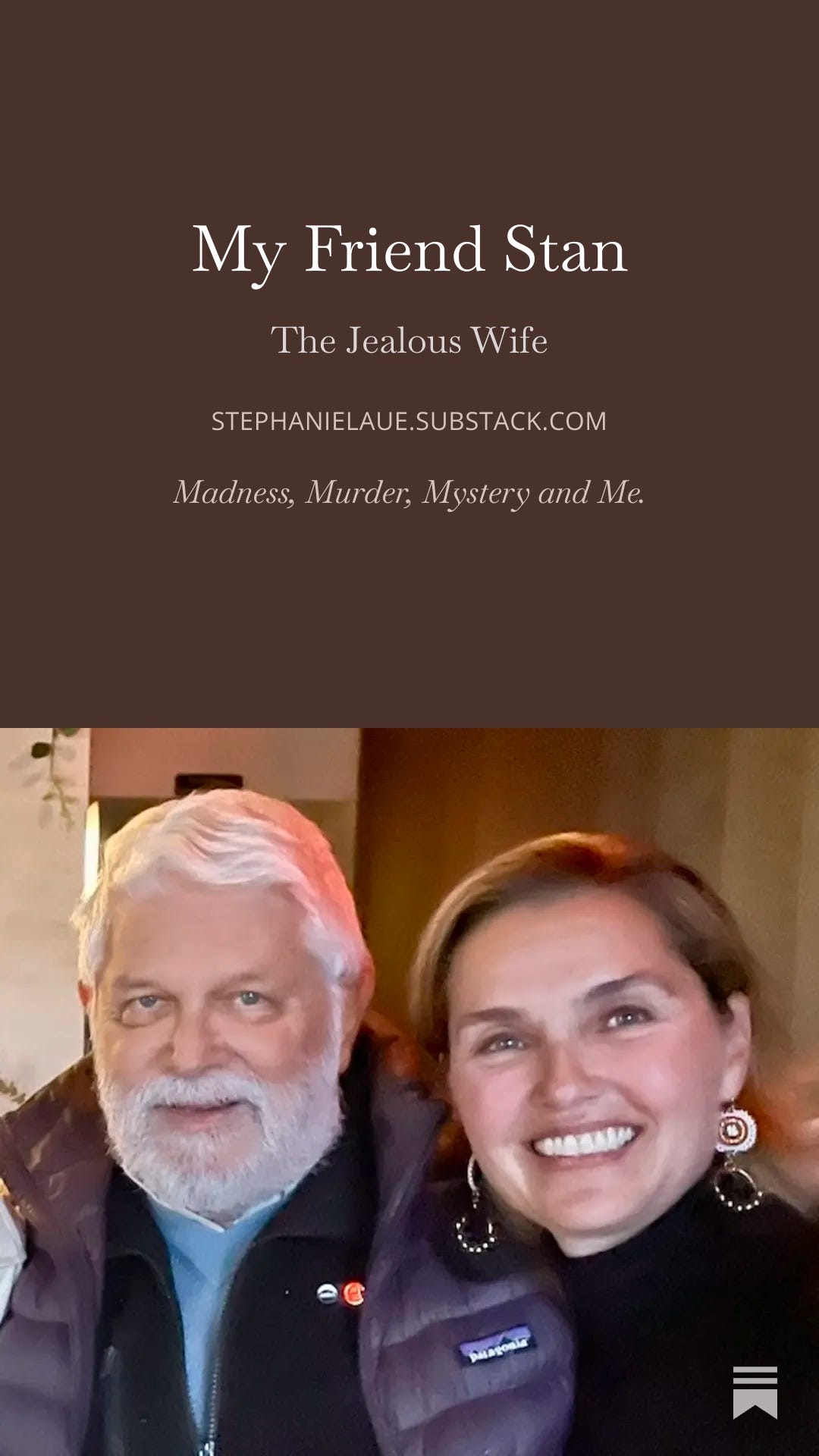
I’m excited to kick off a new series on the blog: My Friend Stan. Over three posts, I’ll be talking with Dr. Stanley Semrau a retired forensic psychiatrist about three cases from his book: Murderous Minds on Trial, exploring the intersection of forensic psychiatry and the law. Stan is a veteran forensic psychiatrist who devoted decades to practicing in British Columbia, Canada. Over the course of his career, he assessed violent offenders, provided expert testimony in court, and I am fortunate enough to call him a friend.
First up: a case that proves jealousy can be stranger―and darker―than you might imagine. Chapter 16 – The Jealous Wife
The case begins like many domestic tragedies.
A young couple, married only two years, living on the edge of poverty. Their relationship is tense. Arguments simmer beneath the surface until, eventually, they boil over.
The wife has become convinced that her husband is being unfaithful.
One night, after hours of brooding and rumination, she walks into the living room where he lies asleep on the couch. She picks up a kitchen knife and slits his throat from ear to ear.
At first glance, it appears to be a crime of jealousy.
But the truth behind the murder turns out to be stranger than anyone expected.
The husband wasn’t cheating with another woman.
He was sexually abusing their dogs—sometimes in front of his wife. Over time, his attention, affection, and sexual focus had shifted almost entirely to the animals.
The wife became consumed with humiliation, jealousy, and rage.
It didn’t matter that her rival walked on four legs. In her mind, the marriage vows had been broken.
When I spoke with Stan about the case, he laughed and asked me why this one stood out for me, after all there are far more gory crimes in the book.
“I think it stayed with me because it was so bizarre,” I said. “The bestiality itself was disturbing—even eye-opening for me—but what really struck me was that she killed him, not the dogs, the object of his affections. She wouldn’t have done jail time for killing the dogs.”
“Her emotional reaction was, in some ways, more familiar. Jealousy often sparks anger and rage,” Stan told me. “She directed her fury at the source of the betrayal—the husband who had promised to be a devoted husband.”
What puzzled him far more was the husband.
“What I found fascinating was the psychological mechanism behind his behaviour,” Stan told me. “His behaviour was deeply abnormal. Why would someone be inclined to put peanut butter on himself while reclining on the sofa and have the dog pleasure him?”
I couldn’t agree more.
When you first learned the “other woman” was actually the family dogs, what was your immediate reaction?
“My first reaction was disbelief,” he said. “It very quickly that turned into, ‘Are you serious? You killed him over the family dogs?’”
There was also another reaction.
“A mild sense of disgust,” he admitted.
You noted that she had below-average intelligence. Did that play any role in the violence?
“I’m not sure it factored into the outcome,” he said. “It was more of an observation than an explanation.”
Did this case change the way you view human relationships?
“Yes,” he said. “It certainly expanded my view of what people can do. But her violence followed a familiar emotional trajectory—hurt turning to humiliation, humiliation turning to fury. It didn’t matter in this case that her jealousy was toward a dog. He had violated their wedding vows.”
What does this case reveal about the human mind when it feels betrayed?
“That jealousy comes in many forms,” Stan said. “The source of the betrayal doesn’t always matter.”
Check back in two weeks for the next installment, when we’ll explore Stan’s most infamous case: Clifford Olson, one of Canada’s most notorious serial killers.
Omg no words
I was waiting for you to say she killed him because he raped the dog. Cause that makes more sense to me.